Kewal Singh Dhillon Barnala · Punjab

A life in
public service

From a farming household in Tallewal to the presidency of a state party organisation — seventy-six years, three continents and four decades of electoral politics.

Born
16 May 1950, Tallewal, Barnala
Father
Sardar Sajjan Singh, farmer
Educated
Barnala; S.D. College, Barnala
Elected office
MLA, Barnala (2007–2017)
Current office
President, BJP Punjab (from 2026)
01Profile

An introduction

Kewal Singh Dhillon has spent almost forty years in the public life of Punjab, most of it within a single district. He is, by the ordinary measures of state politics, a constituency politician: someone whose reputation was built in one Assembly segment, contested there repeatedly, and whose name in Barnala is attached less to a national programme than to a set of local facts — a district headquarters, a college, a set of roads, a rail over-bridge.

That local grounding is what makes his elevation in 2026 notable. When the Bharatiya Janata Party named him President of its Punjab unit, it chose a leader from the Malwa countryside rather than from the party’s older urban base, and the first Jat Sikh to head the state organisation. The appointment was read, correctly, as a statement about where the party expects its future votes to come from.

What follows is a chronological account, assembled from published reporting, Election Commission records and affidavits, and his own constituency writing. Where sources conflict — as they occasionally do on details such as the exact extent of his college education — that is noted rather than smoothed over.
02Early life

Tallewal, 1950

He was born on 16 May 1950 in Tallewal, a village that today falls within Barnala district and then lay within the sprawling Sangrur district of the newly reorganised Punjab. His father, Sajjan Singh, was a farmer. The household was of the Jat Sikh agrarian community that has dominated the social and electoral life of the Malwa belt for a century.

His early schooling was in Barnala, the market town some kilometres from the village, and he went on to S.D. College, Barnala. Election affidavits filed with the Election Commission record his qualification as having completed the twelfth standard and having studied B.A. Part I at S.D. College in 1969–70; his own constituency writing describes a completed B.A. from the same institution. What is not in dispute is the college itself, and the fact that he would return to it a decade later as a donor.

Africa, America, and a decision to come back

At nineteen he left Punjab for Africa, where his father was then working — a familiar route for Punjabi families of that generation, whose networks of migration ran through East Africa and, later, North America and Britain. He subsequently moved to the United States. In 1979, at twenty-nine, he returned to India with the intention of building his business ventures at home rather than abroad.

That decision matters to the rest of the story. The years abroad supplied capital and a comparative frame of reference; the return supplied the constituency. Almost everything he has done publicly since has been rooted in the district he came back to.

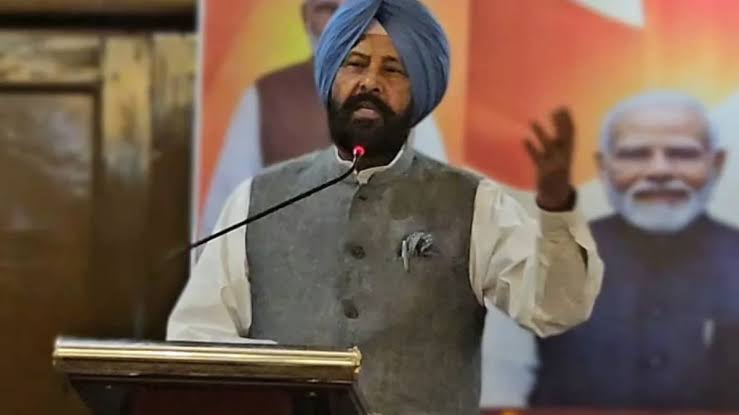
Kewal Singh Dhillon speaking from a lectern at an indoor party function
Addressing a party function from the lectern — the working format of most of his public life.
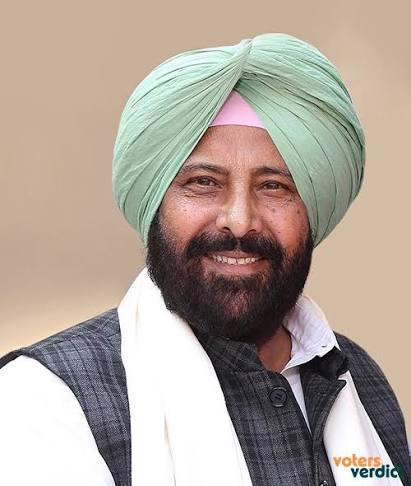
Portrait of Kewal Singh Dhillon in a green turban and dark waistcoat
Kewal Singh Dhillon, portrait.
03Formation

Business first, politics second

Between his return in 1979 and his entry into organised politics in 1986 he established himself in business in Punjab — enterprises in which his two sons are now involved. It is an unusual sequence for an Indian state politician of his generation, most of whom arrive in public life through student politics or a family seat. He arrived with an independent base.

The first public act on the record predates his political career. In 1979, the year he came home, he donated ₹51,000 to S.D. College, Barnala to establish D-Pharmacy classes — a vocational course that opened a route into pharmaceutical employment for local students who could not travel for training. It set a pattern he would repeat: identify a service the district lacked, and fund or lobby it into existence.

A trust, and a college for village girls

He later established a trust in his father’s name, which has operated more than twenty-five stitching centres. Women completing the course receive a certificate and a sewing machine — a small but consequential piece of equipment in a rural economy where tailoring is one of the few home-based trades available to women.

He also secured the establishment of a B.Ed. college in Tallewal itself, intended for girls from the surrounding villages. The reasoning was geographic: teacher training was available, but only at a distance that many rural families would not permit their daughters to travel.

04Public life

Four decades of electoral politics

His entry into organised politics is dated to 1986, when he met Prime Minister Rajiv Gandhi at a public event and was subsequently appointed president of the Punjab Youth Congress. In 1989 he was offered the Congress ticket for the Sangrur Lok Sabha seat but did not contest.

Two terms for Barnala, 2007–2017

His first electoral victory came in February 2007, when he won the Barnala Assembly seat for the Congress with 58,723 votes, defeating Malkit Singh Keetu of the Shiromani Akali Dal, who polled 57,359. He held the seat in 2012, taking 54,570 votes against Keetu’s 49,048 — a margin of 5,522. During the second term he served as senior vice-president of the Punjab Pradesh Congress Committee, and in the run-up to the 2014 general election was appointed by the party’s central leadership as an observer for Maharashtra, Madhya Pradesh, Uttar Pradesh and Delhi.

The 2017 election ended that run. The Aam Aadmi Party’s Gurmeet Singh Meet Hayer took Barnala; Dhillon polled 45,174 votes, 33.67 per cent of the total. In 2019 he contested the Sangrur Lok Sabha constituency for the Congress against Bhagwant Mann of the AAP, polling 303,350 votes — 27.43 per cent — without winning the seat.

A change of party, 2022

After the Congress’s defeat in the 2022 Punjab Assembly election, Dhillon left the party he had served since the 1980s and joined the Bharatiya Janata Party on 4 June 2022, alongside a group of other Congress figures. He was fielded almost immediately as the BJP’s candidate in the Sangrur Lok Sabha by-election, polling 66,298 votes, and was later made a vice-president of the party’s Punjab unit. He contested the Barnala Assembly by-election in November 2024 as the BJP candidate, taking 17,958 votes.

State president, 2026

On 28 May 2026 the party’s central leadership announced his appointment as President of the BJP’s Punjab unit, succeeding Sunil Jakhar, whose three-year term was concluding. He assumed office on 3 June 2026. On taking charge he named farmers’ welfare, youth employment and the state’s overall development as his priorities, and set the formation of a BJP government in Punjab at the 2027 Assembly election as his stated objective.

05Character

What the record shows about the man

Assessments of a serving politician’s character are best made from what is documented rather than from what is asserted. Three things stand out in Dhillon’s case.

The first is persistence in one place. He has contested Barnala or the Sangrur seat that contains it in 2007, 2012, 2017, 2019, 2022 and 2024 — winning twice and losing four times, including twice heavily. Few politicians return to the same ground after a nine per cent result.

The second is a preference for administrative outcomes. The achievements he and his supporters cite are almost all of one type: a district notified, a course started, a bridge sanctioned, a grid built, a grant released. They are the sort of results that require sustained follow-up with the state administration rather than public campaigning.

The third is an association with Captain Amarinder Singh. Reporting on his 2026 appointment consistently identifies him as a close confidant of the former Punjab Chief Minister, and describes his access to Amarinder’s support base in Malwa as part of what he brings to the role. Amarinder Singh publicly welcomed his elevation.

06Context

The Punjab he has worked in

To read this career only as a sequence of elections is to miss its setting. Barnala sits in Malwa, the largest of Punjab’s three regions and the one that decides its governments. For most of Dhillon’s adult life, Malwa politics was a contest between the Congress and the Shiromani Akali Dal, with the Bharatiya Janata Party a junior urban partner confined to the Hindu-majority towns of Doaba and Majha.

Two events broke that arrangement. The Aam Aadmi Party’s arrival after 2014 took rural Malwa seats — including Barnala in 2017 — from both established parties. And the BJP’s split from the Akali Dal in 2020, during the farm-laws agitation, left it contesting Punjab alone for the first time, without a rural Sikh partner and with an acute need for rural Sikh leadership of its own.

Dhillon’s appointment in 2026 is a direct consequence of that second change. Naming a Jat Sikh from agrarian Malwa to lead the state unit is the organisational expression of a strategy the party has pursued since 2022: to become a party that can contest, rather than merely support, in the Punjabi countryside.

In his own constituency

A politician of one district

Barnala became a district in 2006, elected him in 2007 and again in 2012, rejected him in 2017 and 2024, and remains the ground he returns to. The relationship between a representative and one place is the through-line of this biography.

Follow the chronology

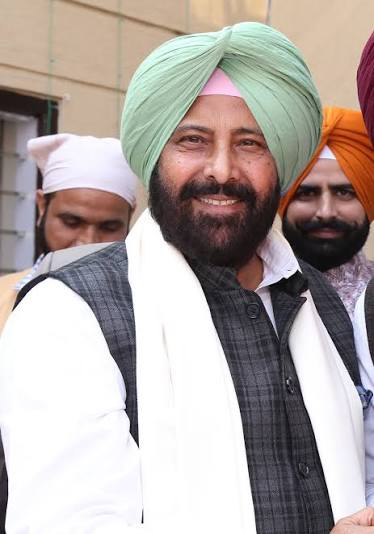
Kewal Singh Dhillon in a waistcoat and white scarf at a public occasion
Kewal Singh Dhillon at a public occasion.

Verification

Sources & further reading

Every date, vote count and appointment on this page is drawn from the following published sources. Where only his own constituency writing records a detail, that is stated in the text above.